
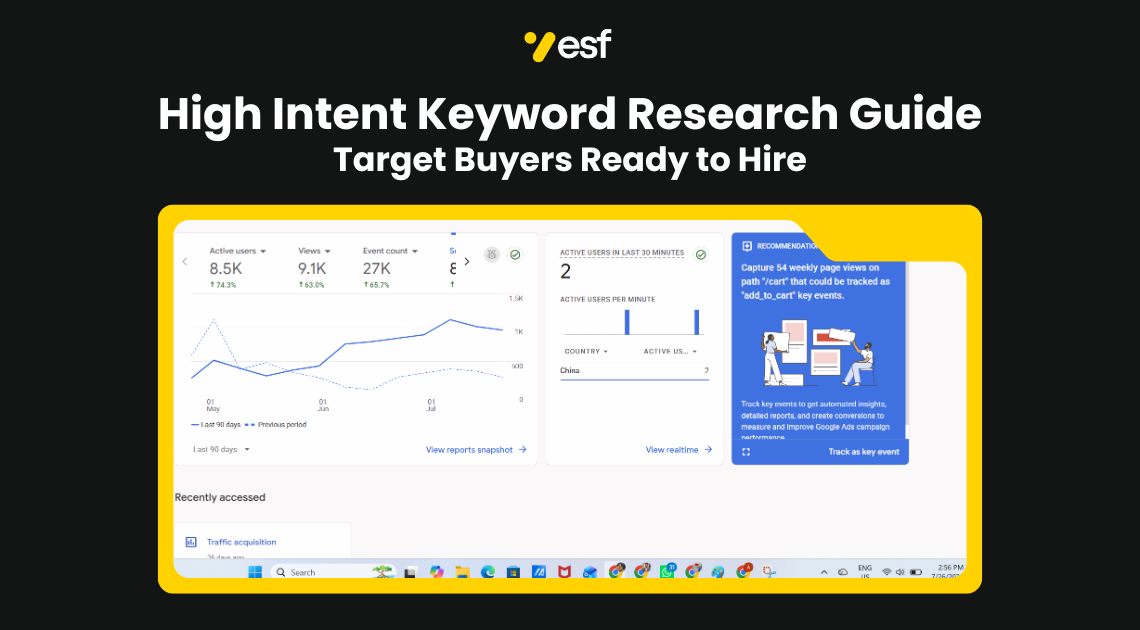
If you have ever opened a search engine performance report, you have probably seen a chart with a line pointing straight up. The report proudly highlights that your overall website traffic has grown by hundreds or even thousands of percent over the past year.
Then you log into your client management portal, check your direct inbox, or look at your phone log, and you hear complete silence.
This disconnect is the most common frustration business owners face with digital marketing. You invest time, capital, and mental energy into getting your pages ranked on search results, but the phone stays quiet, contact forms sit empty, and high-value prospective clients never arrive.
Why does this happen? It happens because standard search campaigns chase raw numbers instead of buyer intent. They focus on broad, generic terms that attract casual browsers, students doing academic research, competitors reviewing your layout, or people looking for free do-it-yourself instructions.
When I run an organic growth strategy as a freelance SEO expert, I do not build campaigns around vanity metrics. I build them using high intent keyword research.
Whether your business operates in local trade services, legal representation, private health clinics, corporate finance, event hospitality, or specialized business consulting, your website does not need to be seen by every person on the internet. It only needs to be seen by the exact decision-maker who has an active problem, an allocated budget, and a clear desire to hire a professional right now.
Let us explore how this process works across every major industry sector, why chasing raw search volume burns through marketing capital, and how targeting the right commercial phrases turns your online presence into a predictable pipeline for acquiring new clients.
What Is High Intent Keyword Research?
If you reached this guide from one of my individual service pages, you might be asking whether this strategy applies specifically to your market.
The short answer is yes. High intent keyword research is the process of identifying the precise phrases, questions, and problem statements your ideal clients enter into search engines when they transition from passive browsing to actively hiring a service provider.
Whether you manage an architectural office, operate a specialized medical clinic, run a local salon, handle industrial junk removal, arrange commercial property mortgages, or offer corporate consulting, every prospective customer passes through three distinct search stages before making a financial commitment:
[ Stage 1: Broad Exploration ]    --> General topics, DIY guides, and casual inspiration
             │
             ▼
[ Stage 2: Commercial Evaluation ] --> Comparing service providers, checking certifications, and local reviews
             │
             ▼
[ Stage 3: High-Intent Action ]    --> Direct hiring inquiries, booking consultations, or requesting formal quotes
Stage 1: Broad Exploration
The searcher is looking for general ideas, basic cost estimates, or background context. This audience has minimal commercial value because the individual is simply gathering information without an active intent to purchase.
Stage 2: Commercial Evaluation
The searcher has recognized a specific need and is actively evaluating solutions. They compare local service providers, read client feedback, verify industry credentials, and analyze service packages. This traffic carries strong commercial interest and forms the foundational core of an effective B2B keyword strategy.
Stage 3: High-Intent Action
The searcher faces an immediate requirement, holds a designated budget, and seeks an expert to handle the work. They use highly specific phrases to request a proposal, schedule an initial consultation, or arrange immediate service delivery. This stage yields maximum commercial return and delivers true pipeline keyword discovery.
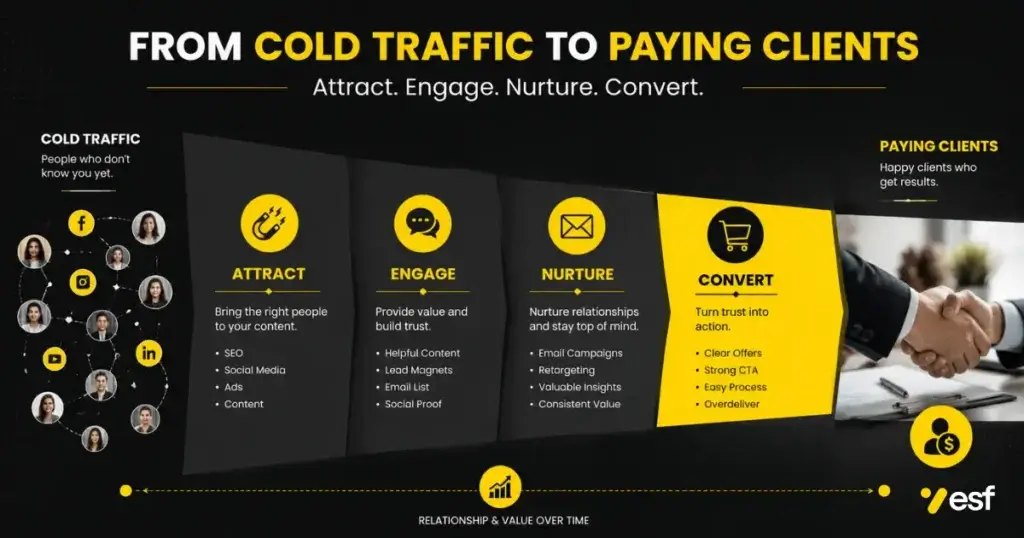
When we structure your search strategy around Stage 2 and Stage 3 queries using high intent keyword research, every visitor who lands on your site arrives already pre-qualified and ready to engage.
Why High Search Volume Is a Misleading Trap
Traditional keyword software ranks search phrases by their estimated monthly query volume. It is easy to fall into the trap of assuming that a keyword with ten thousand monthly searches is inherently more valuable than a phrase with forty searches.
However, official guidelines from Google Search Central emphasize that search algorithms prioritize content that directly satisfies specific user intent over content that targets broad, high-volume search phrases. Furthermore, consumer behavioral data published by Think with Google demonstrates that modern buyers use longer, highly descriptive phrases when they are close to completing a transaction.
Across all thirty-six of my specialized service niches, broad high-volume searches often represent a drain on marketing resources for three clear reasons.
1. Generic Phrases Lack Commercial Search Intent
Broad search terms attract massive audiences, but very few real buyers. They lack the explicit commercial search intent required to convert page views into real revenue.
Broad Term (Low Intent)              High-Intent Query (Ready to Buy)
-----------------------              --------------------------------
"Corporate Law"          -------->   "Contract dispute lawyer for tech firm"
"Roof Repair"            -------->   "Emergency commercial roof leak repair"
"Dental Care"            -------->   "Invisalign consultation cost for adults"
"Business Insurance"     -------->   "Commercial fleet insurance policy quote"
A search for law or insurance catches students, job seekers, and industry news readers. A search for weddings or automotive services includes individuals gathering visual inspiration or checking general trivia. A search for home improvement captures weekend DIY hobbyists who have no intention of hiring a contractor.
Conversely, when someone enters commercial property management services, emergency immigration attorney, or business fleet insurance broker, the raw search volume is substantially lower, but the commercial value is exponentially higher. Every search represents an active buyer.
2. High Volume Equals Wasteful Competition
Attempting to rank for broad national search terms places your business in direct competition with national media outlets, directory sites, and massive legacy corporations. Outranking these entities requires immense financial outlays, years of effort, and thousands of external links. Focusing on high-intent terms allows you to achieve fast visibility, lower acquisition costs, and secure paying clients while competitors waste resources fighting over empty traffic.
3. Precision Conversion Rates Drive Real Profitability
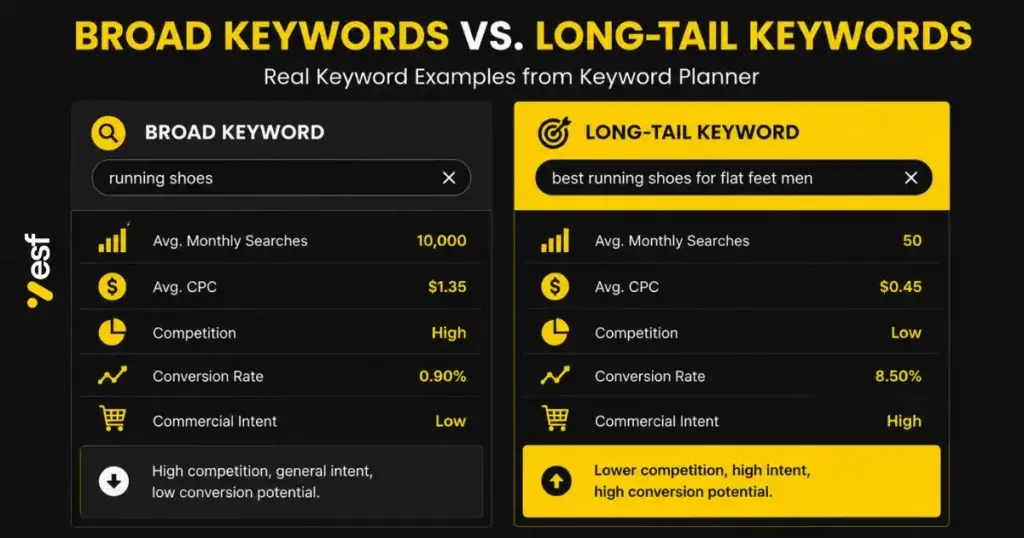
Converting twenty percent of forty hyper-targeted visitors seeking your exact service yields far more actual revenue than converting a tiny fraction of one percent across ten thousand casual visitors.
The Four Categories of Commercial Search Intent
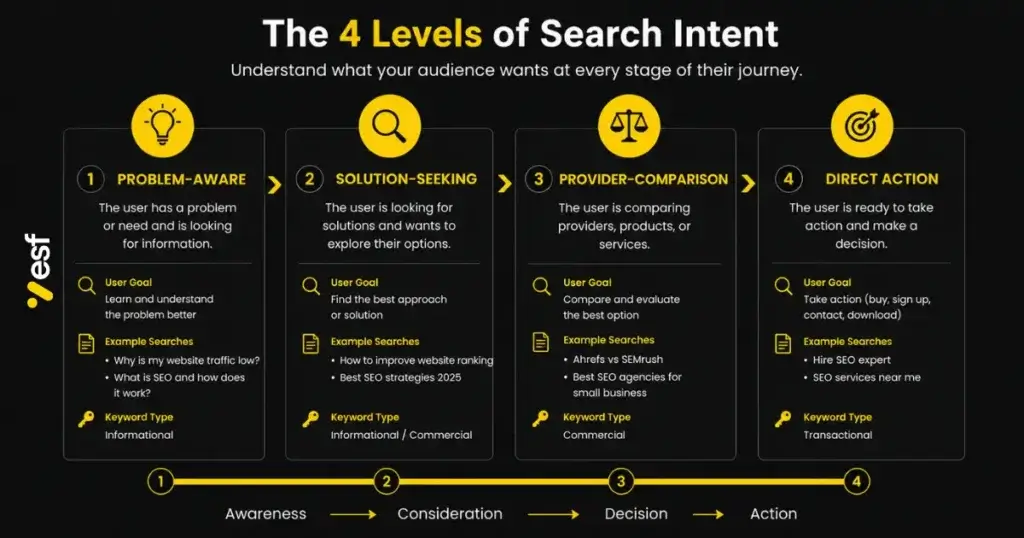
To build an organic client acquisition channel that scales, we categorize search terms based on the user’s explicit psychological state. During high intent keyword research, we segment prospective queries into four specific functional categories.
                      ┌─────────────────────────────────────────┐
                      │ 1. Problem-Aware Queries                │
                      │    "Why is my commercial HVAC leaking?" │
                      └────────────────────┬────────────────────┘
                                           │
                                           ▼
                      ┌─────────────────────────────────────────┐
                      │ 2. Solution-Seeking Queries             │
                      │    "Commercial HVAC repair services"    │
                      └────────────────────┬────────────────────┘
                                           │
                                           ▼
                      ┌─────────────────────────────────────────┐
                      │ 3. Provider-Comparison Queries          │
                      │    "Top rated HVAC contractors near me" │
                      └────────────────────┬────────────────────┘
                                           │
                                           ▼
                      ┌─────────────────────────────────────────┐
                      │ 4. Direct Action Queries                │
                      │    "Schedule emergency HVAC service"    │
                      └─────────────────────────────────────────┘
Category 1: Problem-Aware Queries
The prospective client is experiencing an active issue and wants to understand its cause. Phrases in this category often start with words like why, how to fix, or causes of. While these queries sit closer to the top of the funnel, capturing them with clear diagnostic content positions your firm as the trusted authority before the buyer reaches out to competitors.
Category 2: Solution-Seeking Queries
The client understands their problem and is now searching for a formal professional service. They use phrases containing terms like specialist, firm, company, or professional service. These searches demonstrate clear interest in securing a professional solution.
Category 3: Provider-Comparison Queries
The buyer is actively shortlisting service providers. They use terms like best, reviews, top-rated, cost comparison, or versus. Content targeting these terms must clearly articulate your unique value proposition, certifications, and verified customer outcomes.
Category 4: Direct Action Queries
The buyer is ready to initiate contact. They search using phrases like hire, book consultation, request quote, emergency service, or near me. These pages require streamlined conversion paths, prominent contact details, and clear calls to action.
How I Conduct High Intent Keyword Research for Your Industry
Uncovering high-converting search terms requires looking far beyond basic keyword tools. Software databases only aggregate historical data; they do not understand the immediate business challenges of your prospective clients. Here is the exact, hands-on process I use across all major market sectors when conducting high intent keyword research.
Step 1: Mapping the Trigger Event
Before a prospective client reaches out to an expert, a specific event occurs in their personal life or business operations that creates an urgent need. I define this as the Trigger Event.
- Trades and Field Services: A physical component fails, a system requires immediate safety compliance, or an urgent facility upgrade is mandated.
- Legal and Real Estate Services: A contractual dispute arises, a property transaction moves to closing, or a regulatory notice is delivered.
- Healthcare and Clinical Practices: A patient experiences acute physical discomfort, receives a specific diagnosis, or decides to undergo a elective cosmetic procedure.
- Finance and Insurance Operations: A firm seeks growth capital, faces a tax review, or requires specialized asset protection.
- Events and Hospitality: An engagement occurs, a corporate summit is scheduled, or an organization expands to a new regional location.
- B2B and Professional Consulting: A company experiences software inefficiencies, misses a key performance milestone, or requires specialized external oversight.
By creating dedicated landing pages focused on these specific trigger events, we intercept prospective clients at the exact moment they decide to hire a professional.
Step 2: Extracting Language from Real Customer Interactions
The most valuable search phrases do not originate inside software dashboards—they come directly from the mouth of your ideal client. During the discovery phase, I analyze three primary communication channels:
- Discovery Calls and Sales Inquiries: The exact phrasing prospects use during initial phone consultations when describing their primary frustrations.
- Contact Form Submissions: The specific questions and descriptions clients write when filling out your online inquiry forms.
- Client Onboarding Notes: The historical challenges clients highlight as their main reason for seeking expert assistance.
When real people describe their problems in everyday language, those exact phrases are translated into your site headings, page titles, and core target terms.
Step 3: Combining Core Services with Intent Modifiers
To separate casual online browsers from high-value leads, we pair your core service offerings with specific intent modifiers:
      [ Core Service ]       +       [ Intent Modifier ]       =      [ High-Intent Keyword ]
----------------------------   -------------------------------   -----------------------------------
"Commercial Roofing"         + "Emergency Leak Repair"           = "Emergency commercial roof leak repair"
"Tax Preparation"            + "Corporate Audit Representation"  = "Corporate audit tax preparation firm"
"Dental Implants"            + "Same-Day Consultation"          = "Same-day dental implant consultation"
"Fleet Management"           + "B2B Software Demo"               = "B2B fleet management software demo"
- Urgency and Action Modifiers: Immediate, emergency, fast quote, initial consultation, same-day, direct booking.
- Authority and Credibility Modifiers: Licensed, commercial, certified, accredited, senior specialist, bespoke.
- Geographical Modifiers: Near me, city-specific terms, regional business parks, local district names.
If you operate a regional business where generating direct inbound phone inquiries is your primary objective, my specialized local SEO consultant strategies detail how regional trust signals and map listings convert commercial intent into direct calls.
Industry-Specific Examples of High Intent Keyword Research
To demonstrate how high intent keyword research functions in practice, let us look at real-world keyword transformations across six distinct service sectors.
1. Trades and Field Services
- Low-Intent Broad Query: “Plumbing tips” (Attracts DIY homeowners)
- Medium-Intent Commercial Query: “Best plumber in [City]” (Attracts general comparison shoppers)
- High-Intent Pipeline Query: “Emergency commercial gas line plumber [City]” (Attracts a business owner needing immediate, high-ticket repairs)
2. Legal and Real Estate Services
- Low-Intent Broad Query: “What is a contract?” (Attracts students and researchers)
- Medium-Intent Commercial Query: “Real estate lawyer fees” (Attracts price-sensitive browsers)
- High-Intent Pipeline Query: “Commercial lease dispute attorney for tenants” (Attracts a business facing immediate legal action)
3. Healthcare and Specialized Clinical Practices
- Low-Intent Broad Query: “Why do knees hurt?” (Attracts general health readers)
- Medium-Intent Commercial Query: “Physical therapy vs chiropractor” (Attracts evaluation-stage readers)
- High-Intent Pipeline Query: “Post-surgery knee rehabilitation clinic near me” (Attracts a patient ready to schedule treatment)
4. Finance and Insurance Operations
- Low-Intent Broad Query: “How does insurance work?” (Attracts educational traffic)
- Medium-Intent Commercial Query: “Types of business insurance” (Attracts early-stage planning)
- High-Intent Pipeline Query: “Professional liability insurance broker for tech startups” (Attracts a founder needing coverage to close a funding round)
5. Events and Hospitality Services
- Low-Intent Broad Query: “Wedding decor ideas” (Attracts visual inspiration searchers)
- Medium-Intent Commercial Query: “Wedding venues in [Region]” (Attracts general venue browsing)
- High-Intent Pipeline Query: “All-inclusive outdoor wedding venue booking for 150 guests” (Attracts an engaged couple with an active budget and date)
6. B2B and Corporate Consulting Services
- Low-Intent Broad Query: “What is supply chain management?” (Attracts academic searchers)
- Medium-Intent Commercial Query: “Supply chain software tools” (Attracts mid-level research)
- High-Intent Pipeline Query: “Enterprise supply chain optimization consultant for manufacturing” (Attracts an executive looking to solve costly operational bottlenecks)
Mapping Search Intent to Site Architecture
Executing high intent keyword research is only the first phase of an effective organic strategy. The second phase requires mapping those target phrases onto the appropriate structural page type within your website architecture.
If a prospective client searches for an immediate, high-intent phrase, landing them on a long-form educational blog post creates friction and lowers conversion rates. Conversely, if a visitor is seeking a comparative analysis, sending them directly to a short contact form can cause them to bounce.
                     ┌──────────────────────────────────────────────┐
                     │          HIGH INTENT SEARCH QUERY            │
                     └──────────────────────┬───────────────────────┘
                                            │
               ┌────────────────────────────┼────────────────────────────┐
               │                            │                            │
               ▼                            ▼                            ▼
  ┌─────────────────────────┐  ┌─────────────────────────┐  ┌─────────────────────────┐
  │ High-Intent Action      │  │ Commercial Evaluation   │  │ Problem-Aware           │
  │ "Hire corporate lawyer" │  │ "Law firm packages"     │  │ "Contract dispute steps"│
  └────────────┬────────────┘  └────────────┬────────────┘  └────────────┬────────────┘
               │                            │                            │
               ▼                            ▼                            ▼
  ┌─────────────────────────┐  ┌─────────────────────────┐  ┌─────────────────────────┐
  │ Service Landing Page    │  │ Solution Comparison Page│  │ Diagnostic Guide        │
  │ • Direct Booking Form   │  │ • Clear Package Matrix  │  │ • Detailed Breakdown    │
  │ • Direct Phone Number   │  │ • Client Testimonials   │  │ • Contextual CTA        │
  │ • Trust Badges          │  │ • Case Studies          │  │ • Consultation Link     │
  └─────────────────────────┘  └─────────────────────────┘  └─────────────────────────┘
1. Dedicated Service Pages
- Target Intent: High-Intent Action queries.
- Content Structure: Clear headline directly stating the solution, bulleted lists of specific service inclusions, verified client reviews, trust credentials, and prominent contact forms.
- Primary Objective: Convert the visitor into an inbound phone call or direct quote request immediately.
2. Solution and Pricing Comparison Pages
- Target Intent: Commercial Evaluation queries.
- Content Structure: Detailed package breakdowns, transparent investment criteria, service scope comparisons, and featured client success stories.
- Primary Objective: Build complete commercial trust and guide the prospect into booking a formal discovery session.
3. Comprehensive Diagnostic Guides
- Target Intent: Problem-Aware queries.
- Content Structure: Step-by-step diagnostic advice, clear answers to technical questions, expert insights, and contextual links to relevant service pages.
- Primary Objective: Educate the reader on the complexity of their issue and present your professional service as the natural next step.
If your website is built on WordPress, having a clean site architecture makes it straightforward to roll out dedicated landing pages for every high-intent phrase you target. You can explore how clean site architecture functions on my dedicated WordPress SEO services page.
Aligning High Intent Keyword Research with AEO, GEO, and AI Search
Search behavior is undergoing a major evolution. Generative AI tools, including ChatGPT, Perplexity, Gemini, and Google AI Overviews, now synthesize direct answers to user queries within search result interfaces.
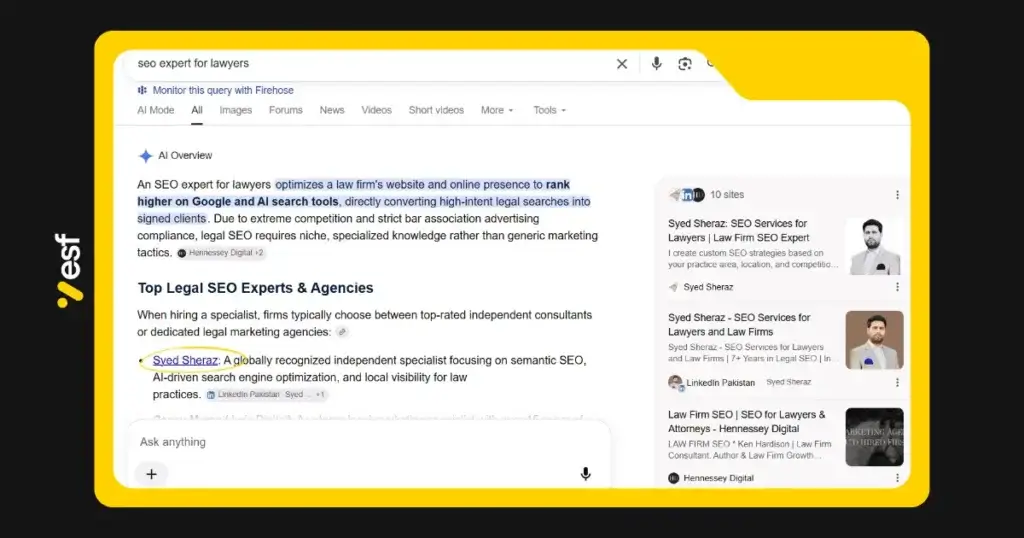
This shift toward Answer Engine Optimization (AEO) and Generative Engine Optimization (GEO) makes high intent keyword research even more valuable. Large language models do not quote generic, low-value content; they cite authoritative sources that answer explicit user problems directly and concisely.
Traditional Search Engine Flow:
[ User Types Query ] -------> [ Clicks 10 Blue Links ] -------> [ Reads Multiple Pages ]

Generative AI Search Flow:
[ User Types Query ] -------> [ AI Synthesizes Direct Answer ] -> [ Cites 2-3 Authoritative Sources ]
To ensure your high-intent service pages are cited as primary sources by AI search engines, we structure your content using three specific optimization standards:
1. Direct-Answer Lead Paragraphs
Every core section begins with a direct two-sentence summary that answers the user’s implicit question immediately. This structure allows generative AI models to extract your content easily for use in synthesized answers.
2. Question-Based Heading Hierarchy
Headings are formatted around natural human speech patterns and explicit diagnostic questions. This alignment helps AI engines recognize your content as a direct match for conversational voice and chat queries.
3. First-Hand Proof and Case Evidence
AI tools can summarize general concepts, but they cannot generate genuine local experience, proprietary client data, or verified case results. Including unique proof points, real-world case examples, and original insights establishes the Experience, Expertise, Authoritativeness, and Trustworthiness (E-E-A-T) required for top-tier rankings and AI citations.
Measuring Performance: Metrics That Truly Matter
When you pivot your strategy away from vanity traffic and toward commercial pipeline generation, your evaluation metrics must shift as well. Tracking raw impression numbers or casual site visits does not reflect business growth.
Instead, we monitor performance using four primary commercial key performance indicators (KPIs):
| Metric Name | What It Tracks | Why It Matters |
| High-Intent Landing Page Conversion Rate | Percentage of visitors on service pages who complete an inquiry form or call. | Validates that the keyword intent matches the page offering. |
| Sales Qualified Leads (SQLs) | Number of inbound inquiries that possess real budgets and fit your ideal client profile. | Confirms that your search traffic consists of genuine buyers rather than casual scrollers. |
| Cost Per Acquisition (CPA) | Total search investment divided by the number of paying clients secured. | Measures the true financial efficiency of your organic marketing efforts. |
| Pipeline Revenue Generated | Total monetary value of active proposals and closed contracts originating from organic search. | Demonstrates the ultimate return on investment of your SEO campaign. |
Ready to Target Searches That Drive Real Revenue?
When you stop chasing empty search volume and start applying systematic high intent keyword research, search marketing stops feeling like an unpredictable expense and starts functioning as a reliable, measurable client acquisition channel.
Every business operates within a unique market environment. Whether you provide local trade services, manage a legal practice, lead a specialized clinical facility, offer financial advisory services, operate a venue, or deliver enterprise corporate consulting, I am here to help you capture the specific search demand that moves your business forward.
How We Can Work Together
- Request a Direct Manual Audit: Want to understand why your current website is not generating qualified inquiries? Visit my contact page for a free SEO audit. I will personally analyze your site structure, review your competitive landscape, and provide clear actionable feedback with zero sales pressure.
- Master the Process Yourself: If you are a business owner who wants to manage your own search strategy without paying ongoing agency retainers, I offer a structured one-on-one SEO training program for local business owners. You will learn how to execute intent research, optimize service pages, and manage local visibility in just two hours per week over one month.
- Full Campaign Execution: If you prefer to have a specialist handle the research, strategy, technical setup, content optimization, and performance tracking personally, you can explore options to hire an SEO expert on a flexible project, part-time, or full-time basis.
Actionable Checklist for High Intent Keyword Research
- [ ] Shift your primary focus away from overall search volume toward explicit commercial search intent.
- [ ] Identify the specific trigger events that prompt clients to seek your professional help.
- [ ] Document real buyer phrasing directly from sales calls, inquiry forms, and client emails.
- [ ] Map high-intent keywords to dedicated, conversion-focused service landing pages.
- [ ] Format core sections so human visitors and AI generative engines receive clear, direct answers fast.
- [ ] Track commercial success through qualified leads and pipeline revenue rather than raw page views.
When your website targets the exact searches your best prospective clients make when they are ready to hire, organic search becomes your most dependable engine for sustainable business growth.
Frequently Asked Questions About High Intent Keyword Research
1. How do I determine if a keyword has high commercial intent or just high search volume?
To distinguish commercial intent from raw search volume, analyze the psychological state of the person typing the query. Broad, high-volume terms like “commercial roofing” or “legal contracts” reflect general interest or academic research.
High-intent terms include specific modifiers that signal a decision-maker ready to spend money, such as urgency indicators (emergency, same-day), service status (licensed, specialized firm), geographic boundaries (near me, regional office), or direct action verbs (hire, book consultation, quote). If removing the word from Google eliminates 90% of casual scrollers and leaves only active buyers, you are looking at a high-intent keyword.
2. Can low-volume, high-intent keywords actually generate enough leads to grow a business?
Yes, absolutely. In specialized B2B services, professional firms, and local trade niches, conversion quality matters far more than traffic quantity.
A generic keyword with 10,000 monthly searches might yield a 0.01% conversion rate because most visitors are students, competitors, or DIY hobbyists. Conversely, a high-intent term with only 30 monthly searches can convert at 20% to 30% because every single visitor has an active problem and an allocated budget. Securing six qualified sales calls from 30 targeted visitors builds a real business pipeline, whereas attracting thousands of empty clicks simply inflates server costs.
3. Should I build separate landing pages for every high-intent keyword I target?
You should create dedicated landing pages for distinct commercial topics, trigger events, or specific regional service areas. However, avoid creating duplicate pages for slight grammatical variations of the same intent.
Modern search engines use natural language processing to group synonyms together. The best approach is to identify your core service offerings and build one high-converting, deeply detailed landing page per core service, structuring subheadings and content sections around the specific high-intent questions and trigger events associated with that offering.
4. How does high intent keyword research help my site rank in AI search tools like ChatGPT and Perplexity?
Generative AI tools and Google AI Overviews do not operate like traditional link-indexed engines. Instead of directing users to ten blue links, AI tools synthesize direct answers to complex queries using authoritative sources.
When you execute high intent keyword research, you naturally align your content with the exact, specific questions human buyers ask when solving complex problems. By answering these high-intent queries with direct summary paragraphs, structured tables, and first-hand proof points, AI search models recognize your site as an primary entity and cite your business as the recommended solution.
5. How long does it take to see commercial results from a high-intent keyword strategy?
Targeting high-intent pipeline keywords typically yields revenue faster than chasing broad, competitive keywords. Broad terms require building massive domain authority, earning hundreds of backlinks, and competing against legacy directories over twelve to eighteen months.
High-intent keywords face less competition from low-quality aggregators, allowing well-optimized, authoritative service pages to index and capture commercial traffic much faster, often within a few weeks to a few months, depending on your site’s foundational technical health and local market competition.